01
Facial Analysis
Your facial proportions and male facial anatomy are assessed first.
Male eye surgery is designed to create a refreshed, defined, and naturally masculine appearance while preserving each patient's individual facial characteristics. The goal is not to create an overly prominent double eyelid, but to enhance the eyes with subtle, balanced changes.
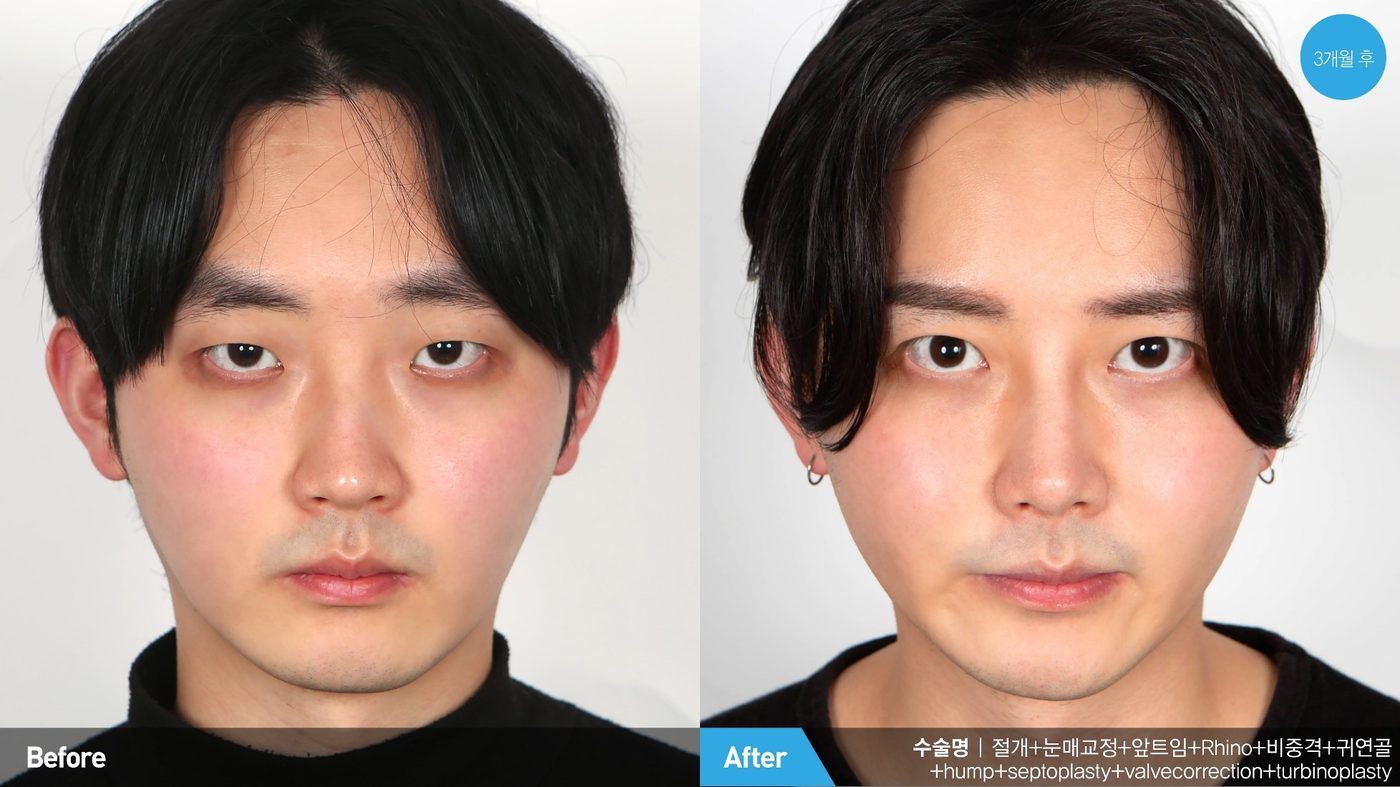
Enhancement, not an overly prominent crease.
The approach emphasizes natural-looking eye correction, a thin subtle double eyelid design, avoidance of an overly feminine appearance, and customized planning based on male facial anatomy. That is why the same three techniques used in general eyelid surgery — ptosis correction, non-incisional, and incisional — are designed to a different standard when planned for men.
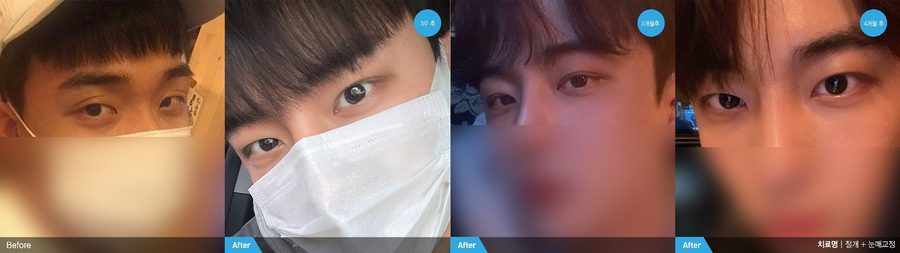
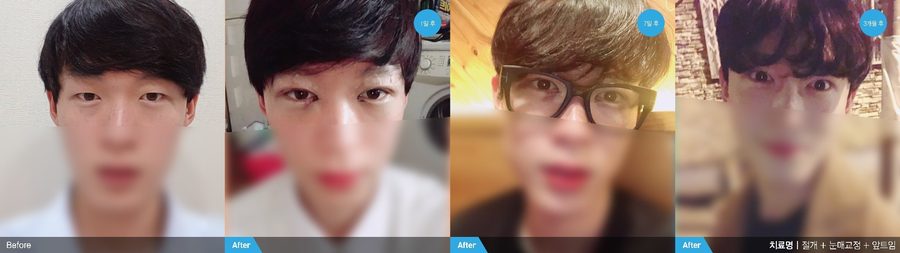
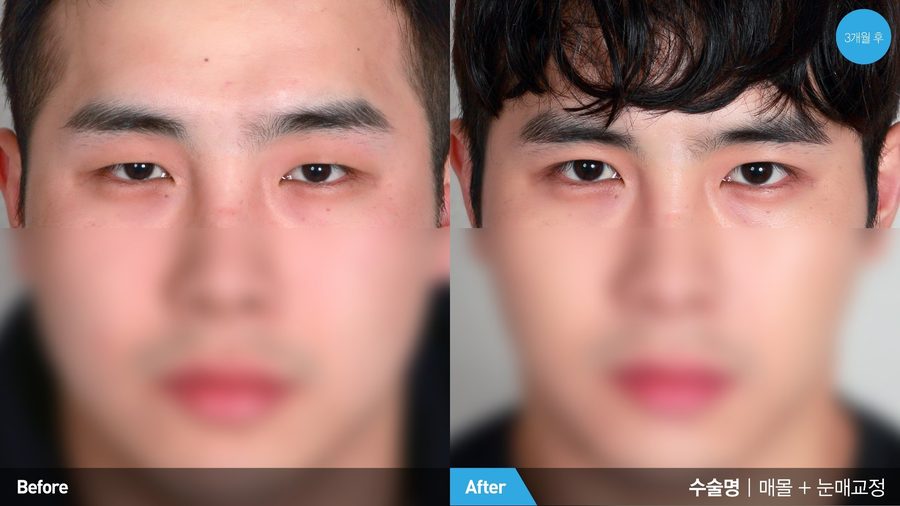
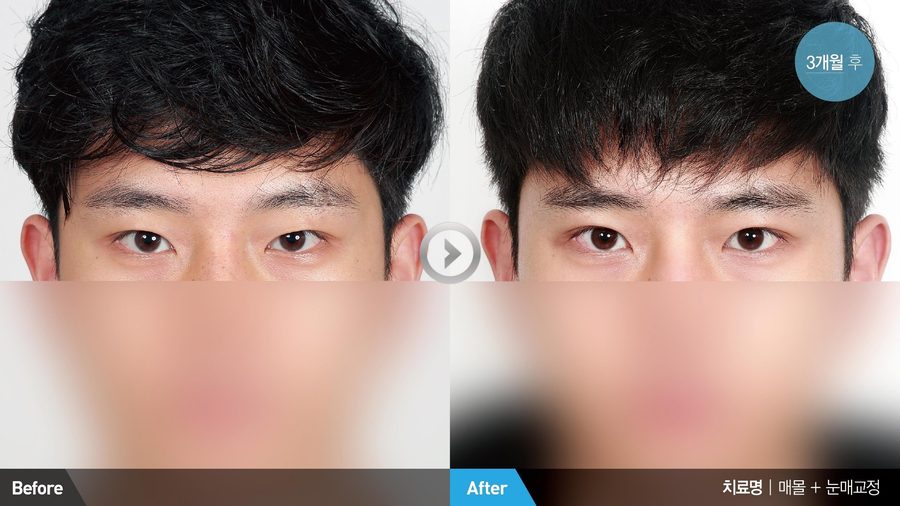
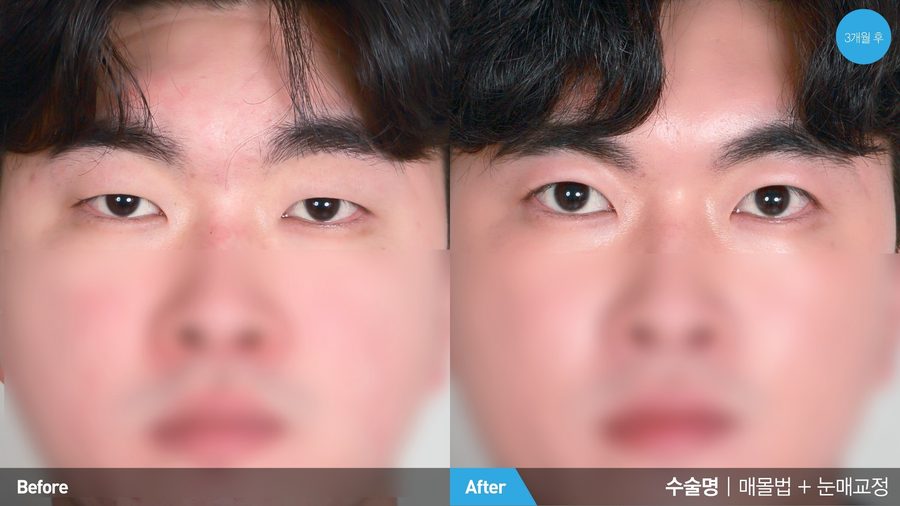
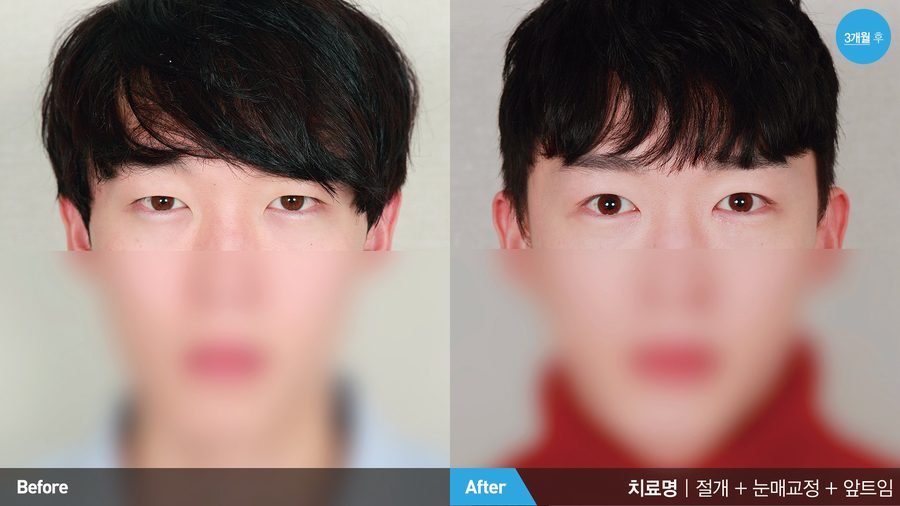
Individual results vary. Photos are standardized examples shown with patient consent and are not a guarantee of outcome.
| What it does | When it is recommended | |
|---|---|---|
| Ptosis correction | Strengthens eyelid function to improve eye opening and visual appearance | Weakened eyelid-opening muscles or reduced pupil exposure |
| Non-incisional double eyelid | Small sutures create a natural-looking crease with minimal scarring and relatively short recovery | Selected patients with thinner eyelid skin and minimal excess tissue |
| Incisional double eyelid | The incision allows removal or repositioning of tissue while creating a defined crease | When excess skin, fat, or thicker eyelids require permanent structural correction |
The appropriate method depends on eyelid thickness, skin redundancy, fat volume, and desired longevity — determined during consultation rather than by preference alone.
The eyes are assessed in relation to your overall facial proportions.
Eyelid thickness, skin redundancy, and fat volume are evaluated.
Eyelid-opening muscle function and pupil exposure are assessed.
Your aesthetic goals are discussed against what your anatomy allows.
The plan is customized to male facial anatomy rather than a standard design.
A refreshed appearance without an obviously operated look.
Where ptosis contributes, eye opening is addressed directly.
An overly feminine appearance is specifically avoided.
The crease is designed thin and subtle for your anatomy.
The eyes are planned in relation to your whole face.
A consultation and examination — including ptosis evaluation — are required to determine which technique suits your anatomy.
Your facial proportions and male facial anatomy are assessed first.
Eyelid thickness, skin redundancy, and fat volume are evaluated.
Eyelid-opening muscle function and pupil exposure are checked before technique selection.
A thin, subtle crease is designed for a natural masculine appearance.
Ptosis correction, non-incisional, or incisional technique — alone or combined when medically appropriate.
Structured postoperative swelling management and follow-up.
Swelling is common during early healing, with structured swelling management provided.
Bruising is common and improves as healing progresses.
Mild discomfort is common during the early recovery period.
Individual healing timelines differ between patients.
Recovery varies according to surgical technique, and individual healing timelines differ. Your surgeon provides a personalized schedule.
A message from the surgeon, a look inside the clinic, and stories from patients.

Set each block's data-video to your YouTube video ID to enable playback.
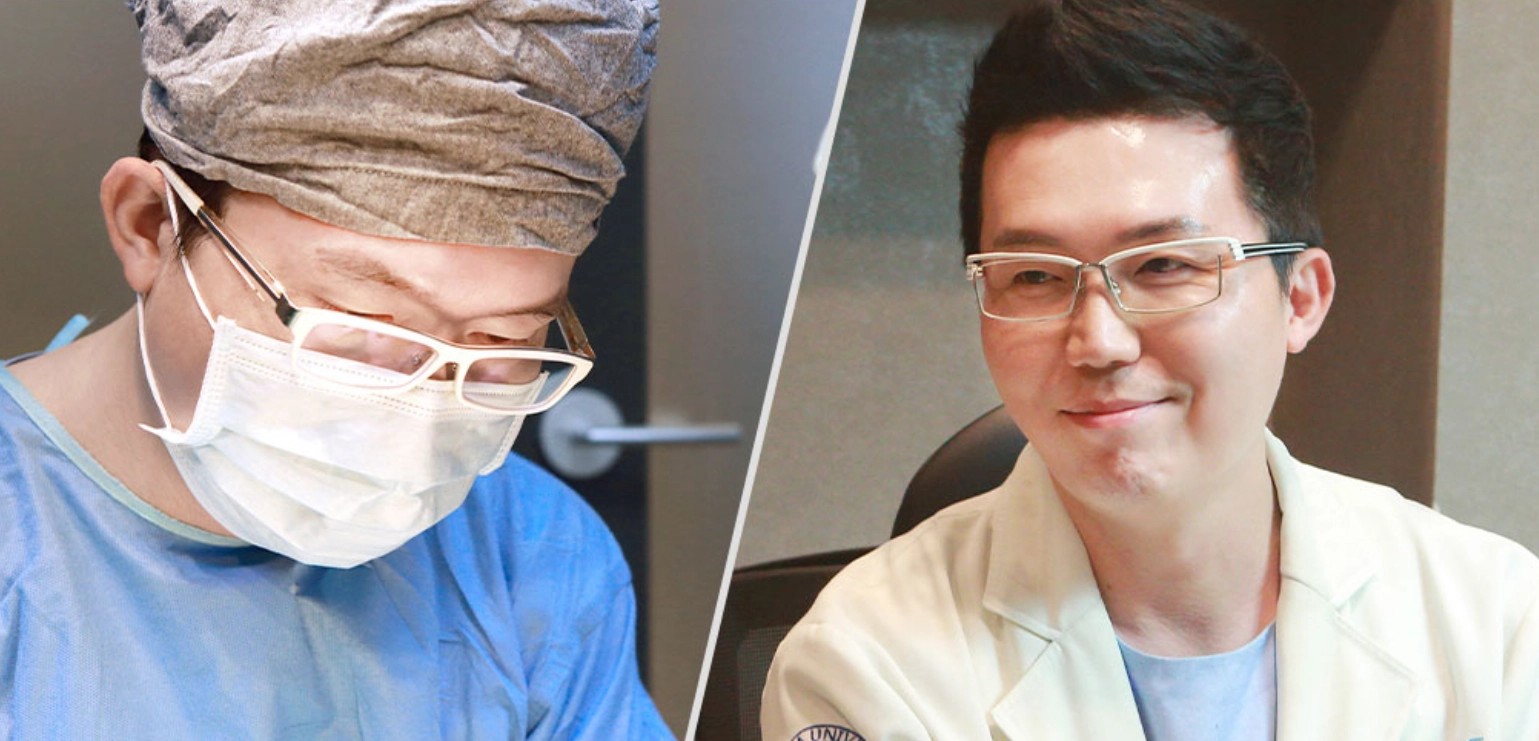
 Surgeon Portrait
Most men who come to me do not want a double eyelid.
They want to stop looking tired. Those are different requests — and often the answer is the muscle, not the crease.
Every procedure begins with facial analysis, eyelid anatomy assessment, ptosis evaluation, and a discussion of your goals — because whether you need a crease, better eye opening, or both is a clinical question, not a preference.
Individual results and recovery experiences vary. This page is provided for general educational purposes and does not constitute a diagnosis, treatment recommendation, or guarantee of surgical results. Newly developed, rapidly progressing, or one-sided eyelid drooping should be evaluated by a qualified medical professional. All surgical procedures involve potential risks, including bleeding, infection, asymmetry, scarring, altered sensation, dry eye or irritation, crease loosening or loss, undercorrection or overcorrection, dissatisfaction with the outcome, and the possible need for revision surgery. The appropriate technique and expected outcome can only be determined following an in-person examination and consultation. Newline Clinic is licensed under the Korean Medical Service Act.
Send your details and our international team will get back to you. No obligation — just a starting point.