Hump Nose Rhinoplasty · Dorsal Hump Reduction

Hump nose rhinoplasty in Busan, Korea — a smoother bridge that keeps its support.

Hump nose rhinoplasty is a personalized procedure designed to reduce a prominent dorsal hump while preserving natural nasal function and facial harmony. Surgical planning is individualized according to hump size, nasal height, septal alignment, and overall facial proportions.

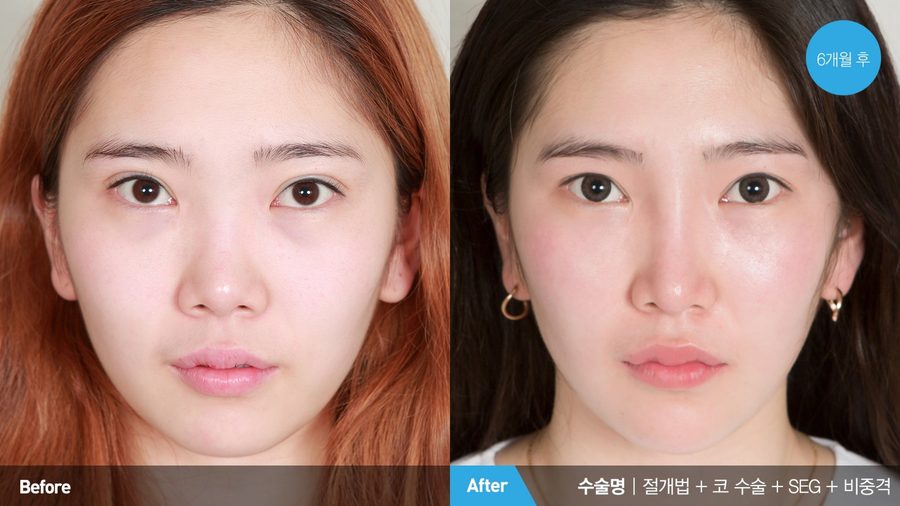
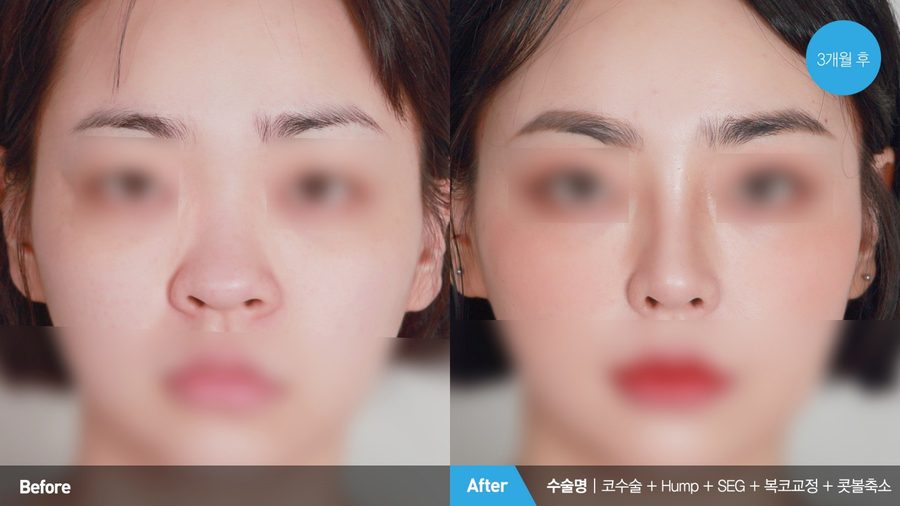
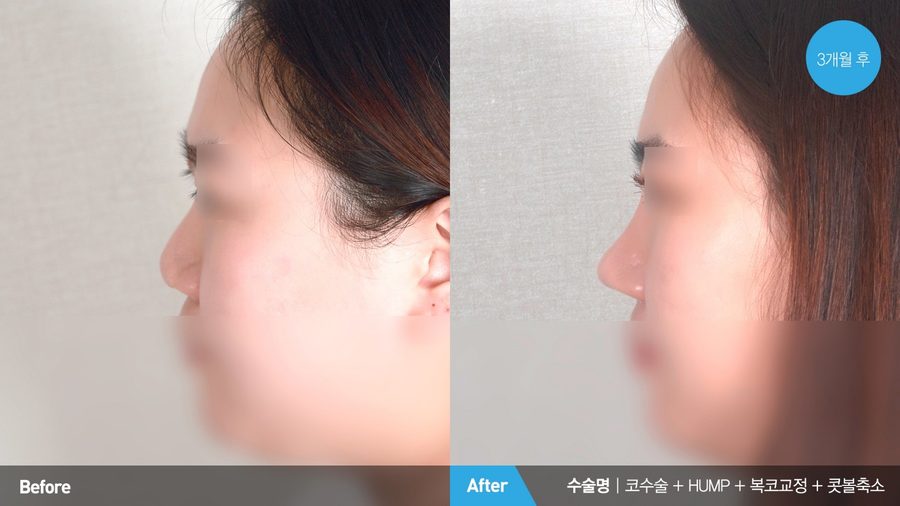
Refined nasal bridge profile after hump nose rhinoplasty at Newline Clinic in Busan, Korea
Hump Reduction
Watch: three hump correction approaches
Customized hump reduction Structural rhinoplasty principles Combined functional & cosmetic planning Support maintained after reduction Comprehensive postoperative care
Hump Nose Rhinoplasty at a Glance

Removing the hump is only half the operation.

Procedure
Hump Nose Rhinoplasty
The Hump
Bone and/or Cartilage
Approaches
Small · Large · With Augmentation
Key Principle
Maintain Structural Support
Often With
Deviation Correction
Planning
Individualized
What Is a Hump Nose?

An excessive prominence of bone and/or cartilage along the bridge.

Because a dorsal hump involves bone, cartilage, or both, treatment depends on the underlying anatomy and may involve selective hump reduction, bridge refinement, structural support, and correction of associated nasal deviation. Reducing the hump without maintaining support is what leads to an unnatural or unstable bridge — which is why structural principles guide the plan.

Results

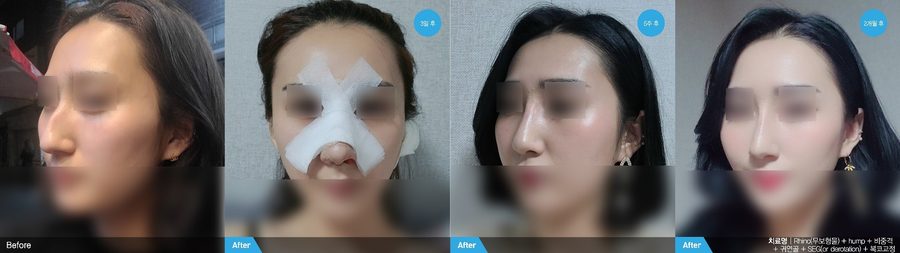
A smoother profile, angle by angle.

Individual results vary. Photos are standardized examples shown with patient consent and are not a guarantee of outcome.

Treatment Approaches

Three approaches, selected by anatomy.

01

Small Hump Reduction

The excess prominence is removed to smooth the bridge profile, where the hump is limited and the underlying structure allows.

When Limited prominence
02

Larger Hump Correction

Correction with bridge reshaping and structural support, because removing a larger hump changes the framework that supports the bridge.

When Substantial hump
03

Reduction with Augmentation

Hump reduction combined with augmentation of a relatively low bridge using autologous tissue when appropriate.

When Hump plus a low bridge
Treatment Principles

What guides hump reduction.

Why it matters
Preserve balanced proportionsOver-reduction can leave the nose out of balance with the face
Create a smooth bridge profileThe goal is a smooth line, not merely a lower one
Maintain structural supportSupport must be maintained after hump reduction, since removal alters the framework
Individualize the surgeryPlanning follows hump size, nasal height, septal alignment, and facial proportions

Reducing a hump changes the structures that support the bridge, which is why structural support is a stated principle rather than an optional extra.

Benefits

What the procedure aims to improve.

Smoother Nasal Bridge

The dorsal profile is refined into a smoother line.

Improved Facial Profile

The nose is balanced against your overall profile.

Personalized Structural Support

Support is maintained or reinforced after reduction.

Simultaneous Correction

Functional and cosmetic correction together when appropriate.

Natural-Looking Results

Balanced proportions rather than maximum reduction.

Who May Benefit?

Candidates are evaluated individually.

You may consider it if you

  • Have a prominent dorsal hump
  • Want a smoother bridge profile
  • Also have septal or external nasal deviation
  • Have a hump alongside a relatively low bridge
  • Want a result balanced with your facial proportions

A consultation determines your plan

  • Hump reduction alters the bridge framework and support
  • Larger humps may require reshaping and structural support
  • Deviation is assessed alongside the hump, not after
  • Recovery varies with the extent of surgery

A consultation and examination are required to determine which approach suits your hump size, nasal height, and septal alignment.

From Consultation to Follow-Up

Your hump rhinoplasty journey.

01

Consultation

Your profile concerns, any breathing symptoms, and goals are discussed.

Step Understanding your goals
02

Assessment

Hump size, nasal height, septal alignment, and overall facial proportions are evaluated.

Step Assessment
03

Approach Selection

Small reduction, larger correction with support, or reduction with augmentation is selected.

Step Individualized choice
04

Surgery

Selective hump reduction, bridge refinement, structural support, and correction of associated deviation when indicated.

Step The procedure
05

Early Recovery

Swelling, bruising, and temporary nasal congestion are common during early healing.

Step First weeks
06

Follow-Up

Follow-up visits monitor healing and long-term results.

Step Ongoing care
Recovery and Aftercare

Recovery depends on the extent of surgery.

Swelling

Swelling is common during early healing.

Bruising

Bruising is common, particularly when bone is addressed.

Nasal Congestion

Temporary congestion is common as internal tissues heal.

Long-Term Monitoring

Follow-up visits monitor healing and long-term results.

Recovery varies depending on the extent of surgery. Your surgeon provides a personalized timeline.

Inside Newline

Meet the team & clinic.

A message from the surgeon, a look inside the clinic, and stories from patients.
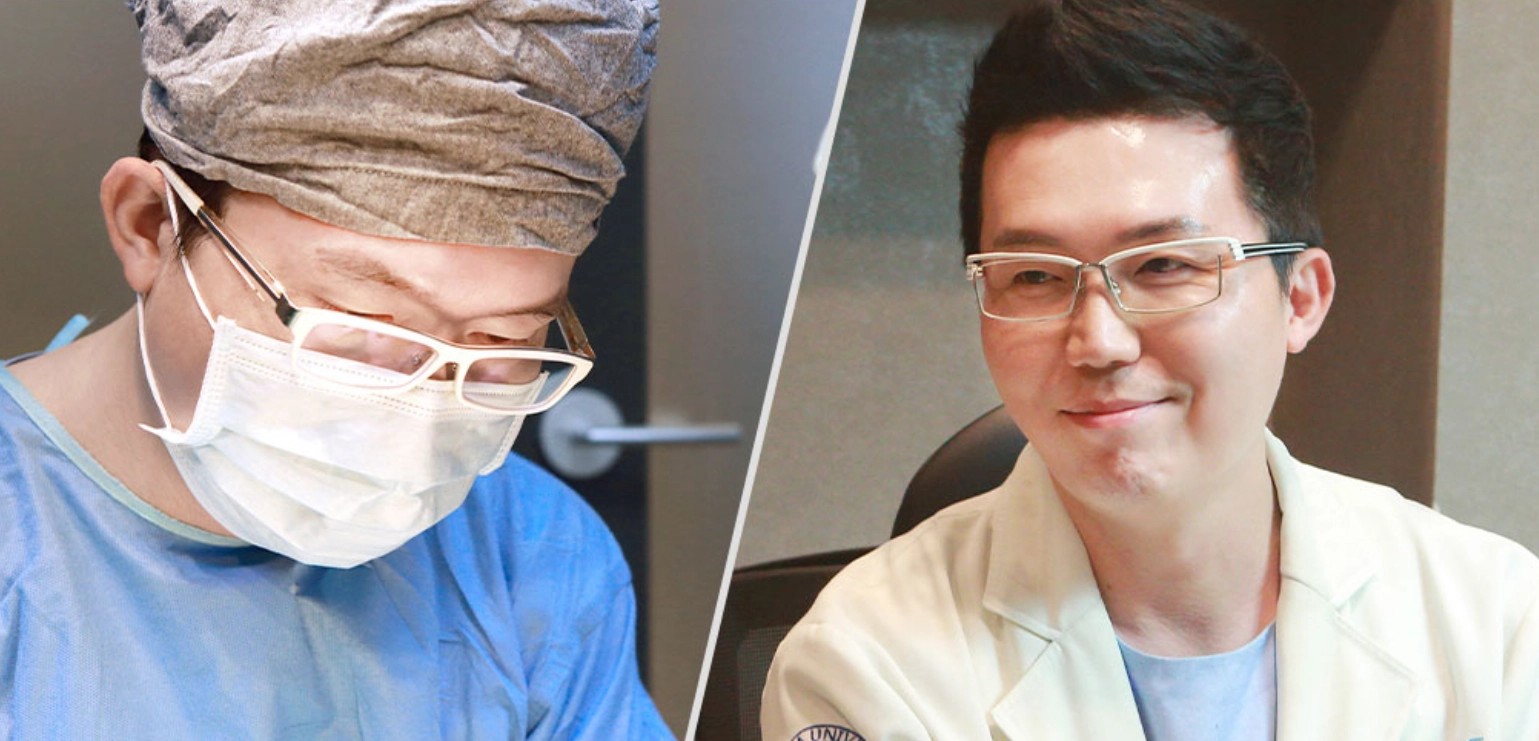
Message from the plastic surgeon at Newline Clinic
Meet the surgeon
Newline Clinic tour in Busan
Clinic tour
Patient story

Set each block's data-video to your YouTube video ID to enable playback.

Dr. Son Hee-dong, plastic surgeon at Newline Clinic Busan Surgeon Portrait
About Your Surgeon

Dr. Son Hee-dong,
plastic
surgeon.

Filing down a hump is the easy part.

What happens to the bridge afterwards — whether it stays supported, straight, and smooth — is the operation that actually matters.

  • Board-certified plastic surgeon · MD, PhD
  • Doctorate in Medicine, Dong-A University Graduate School
  • Clinical Professor, Dept. of Plastic Surgery, Dong-A University Hospital
  • Full member — Korean Society of Plastic and Reconstructive Surgeons, Korean Society for Aesthetic Plastic Surgery, Korean Rhinoplasty Society
  • Experience in structural and functional rhinoplasty
  • Consultation in Korean, English, Japanese and Chinese
View Full Profile
Frequently Asked

Hump Nose in Busan
questions.

What causes a dorsal hump?
A dorsal hump is an excessive prominence of bone and/or cartilage along the bridge of the nose. Depending on the underlying anatomy, treatment may involve selective hump reduction, bridge refinement, structural support, and correction of associated nasal deviation.
Can a hump nose be corrected without changing my overall appearance?
The treatment principles emphasize preserving balanced nasal proportions and creating a smooth bridge profile while individualizing surgery based on anatomy and facial balance, rather than maximal change.
Can a deviated septum be corrected at the same time?
Yes. Many patients with a hump nose also have septal or external nasal deviation. When indicated, functional correction and cosmetic rhinoplasty may be performed together to improve both appearance and nasal airflow.
How long is recovery?
Recovery varies depending on the extent of surgery. Swelling, bruising, and temporary nasal congestion are common during early healing, and follow-up visits monitor healing and long-term results.
Will hump reduction weaken the nose?
Maintaining structural support after hump reduction is one of the stated treatment principles, and larger hump correction includes bridge reshaping with structural support. This is precisely why structural rhinoplasty principles are applied.
What are the treatment approaches?
Three common approaches are described: small hump reduction by removing the excess prominence, larger hump correction with bridge reshaping and structural support, and hump reduction combined with augmentation of a relatively low bridge using autologous tissue when appropriate.
Can a hump be reduced if my bridge is low?
Yes. Hump reduction may be combined with augmentation of a relatively low bridge using autologous tissue when appropriate, so both the prominence and the low segment are addressed.
How is the surgical plan decided?
Surgical planning is individualized according to hump size, nasal height, septal alignment, and overall facial proportions.
Is autologous tissue used?
Autologous tissue may be used when appropriate, particularly for augmenting a relatively low bridge alongside hump reduction.
Considering Hump Reduction in Busan?

Start with a
profile assessment.

Planning follows your hump size, nasal height, septal alignment, and overall facial proportions — because how much can be reduced, and what support is needed afterwards, depends on your anatomy.

Visit the clinic

Find Newline in Busan.

Newline Clinic
40 Bujeon-ro 66beon-gil, Floors 2–5
Busanjin-gu, Busan 47287
Republic of Korea

+82 51 806 0100 · WhatsApp

Get Directions

Individual results and recovery experiences vary. This page is provided for general educational purposes and does not constitute a diagnosis, treatment recommendation, or guarantee of surgical results. All surgical procedures involve potential risks, including bleeding, infection, asymmetry, irregularity or residual prominence of the bridge, loss of structural support, breathing changes, altered sensation or smell, scarring, dissatisfaction with the outcome, and the possible need for revision surgery. The appropriate technique and expected outcome can only be determined following an in-person examination and consultation with a qualified medical professional. Newline Clinic is licensed under the Korean Medical Service Act.

Request a Consultation

Tell us what you're considering.

Send your details and our international team will get back to you. No obligation — just a starting point.

Our international team replies in English, Japanese and Chinese — usually within one business day.